
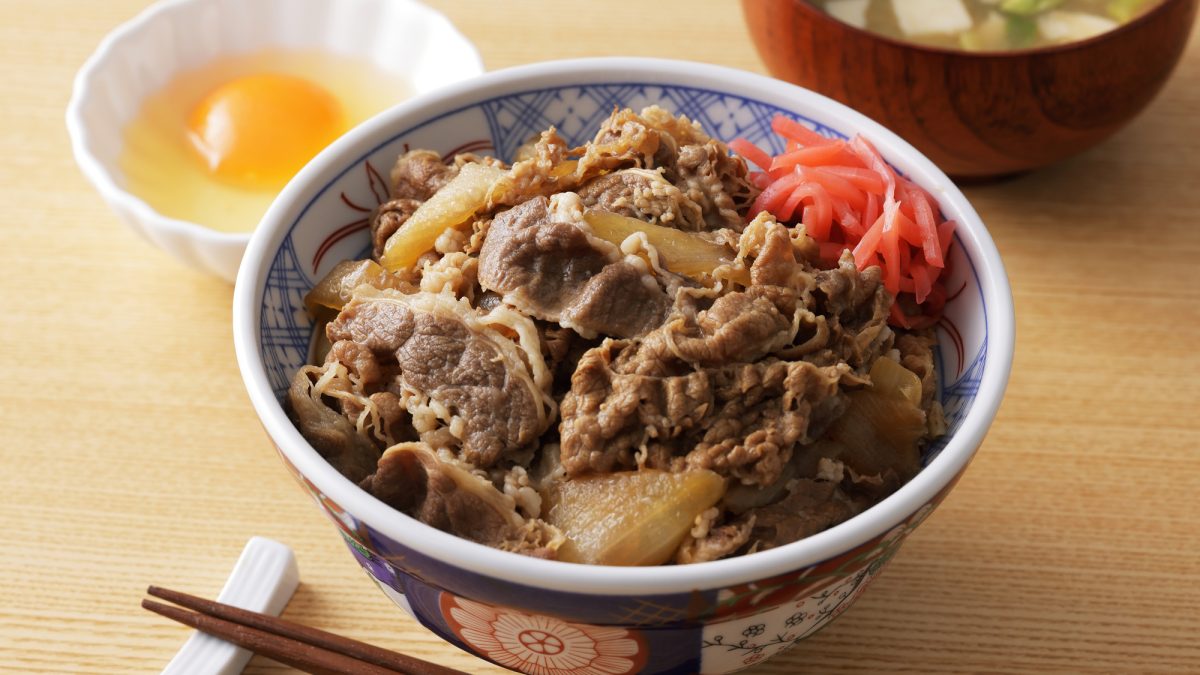
牛丼は、日本のファストフード文化を代表する料理で、安くて早くて美味しいことから、外国人観光客にも人気があります。
牛丼屋の店員は、料理の提供や注文の受付だけでなく、「つゆだく」「ねぎ抜き」「セットの内容」など、細かなカスタマイズに対応する柔軟な接客が求められます。
外国人のお客様に対して、英語で丁寧に対応できれば、日本の食文化をより深く体験してもらえるでしょう。
この記事では、牛丼屋店員の仕事内容や日本の牛丼文化について、英語例文とあわせてご紹介します。
英語での接客力を高めたい方は、ぜひ参考にしてください。
牛丼とは?
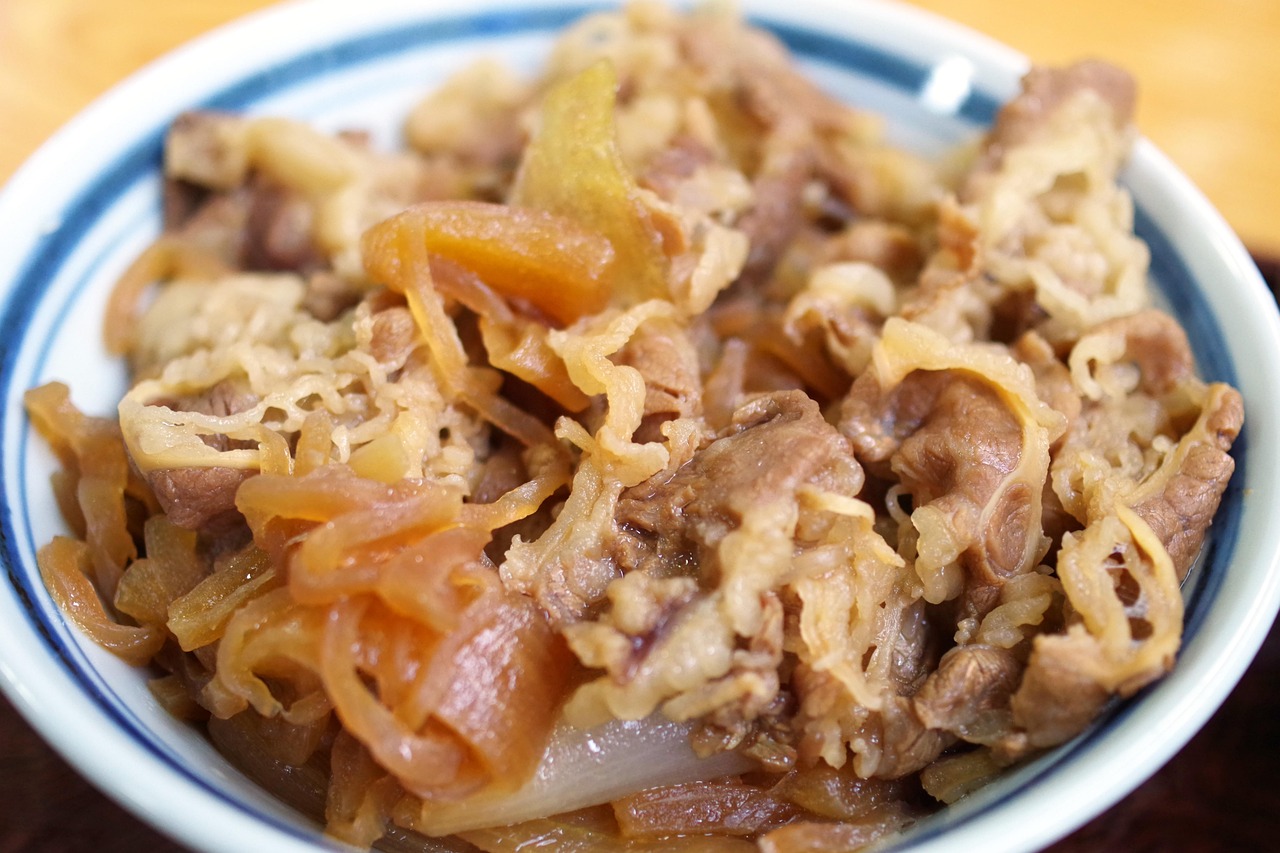
牛丼は、甘辛く煮た牛肉と玉ねぎをご飯の上にのせた、日本の定番丼料理です。
Gyudon is a classic Japanese rice bowl topped with thinly sliced beef and onions simmered in a sweet and savory sauce.
- rice bowl:丼もの
- thinly sliced beef:薄切り牛肉
- sweet and savory sauce:甘辛いタレ
お店によっては「つゆだく(つゆ多め)」や「ねぎ抜き」などの注文も可能で、好みに合わせたカスタマイズができます。
Many shops allow customizations such as “tsuyudaku” (extra sauce) or “negi nuki” (no green onions) to suit customer preferences.
- customizations:カスタマイズ
- suit customer preferences:好みに合わせる
【ピックアップ単語】
bowl
a deep round dish with a wide open top, used especially for holding food or liquid
食べ物や液体を入れるための、口が広くて深い丸い器。
牛丼屋店員とは?
牛丼屋の店員は、注文受付、料理の提供、店内清掃など、スピーディかつ丁寧な接客を行うことが求められます。
Gyudon shop staff take orders, serve meals, clean the shop, and provide quick yet polite service.
- take orders:注文を取る
- serve meals:料理を提供する
- polite service:丁寧な接客
また、外国人のお客様には、並盛・大盛の違いやセットメニューの内容、調味料の使い方などを英語で説明する場面も多くあります。
They often explain size options like regular or large, set menu details, and how to use condiments to international customers.
- size options:サイズの選択肢
- set menu details:セット内容の説明
- condiments:調味料
【ピックアップ単語】
condiment
a substance such as salt, pepper or a sauce that is added to food to give it extra taste
料理に味を加えるために使われる塩・コショウ・ソースなどの調味料。
牛丼屋店員の主な業務内容
牛丼屋では、カウンターでのスピーディな対応と、的確なオーダー処理が重要です。
Gyudon restaurant staff must quickly handle orders at the counter and deliver accurate service.
- handle orders:注文処理を行う
- accurate service:正確な対応
「お味噌汁つきですか?」「テイクアウトですか?」など、基本的な確認事項も英語で行う必要があります。
They should also ask basic questions like “Would you like miso soup?” or “Is it for takeout?” in English.
- takeout:持ち帰り
- basic questions:基本的な質問
外国人客からは、「この肉は何ですか?」「卵は生ですか?」などの質問を受けることもあります。
Foreign guests may ask questions like “What kind of meat is this?” or “Is the egg raw?”
- what kind of meat:どんな種類の肉
- raw egg:生卵
【ピックアップ単語】
raw
not cooked
加熱されていない、調理されていない状態。
※日本では生卵を食べる文化があり、説明が必要な場面がある。
外国人に伝えたい牛丼文化
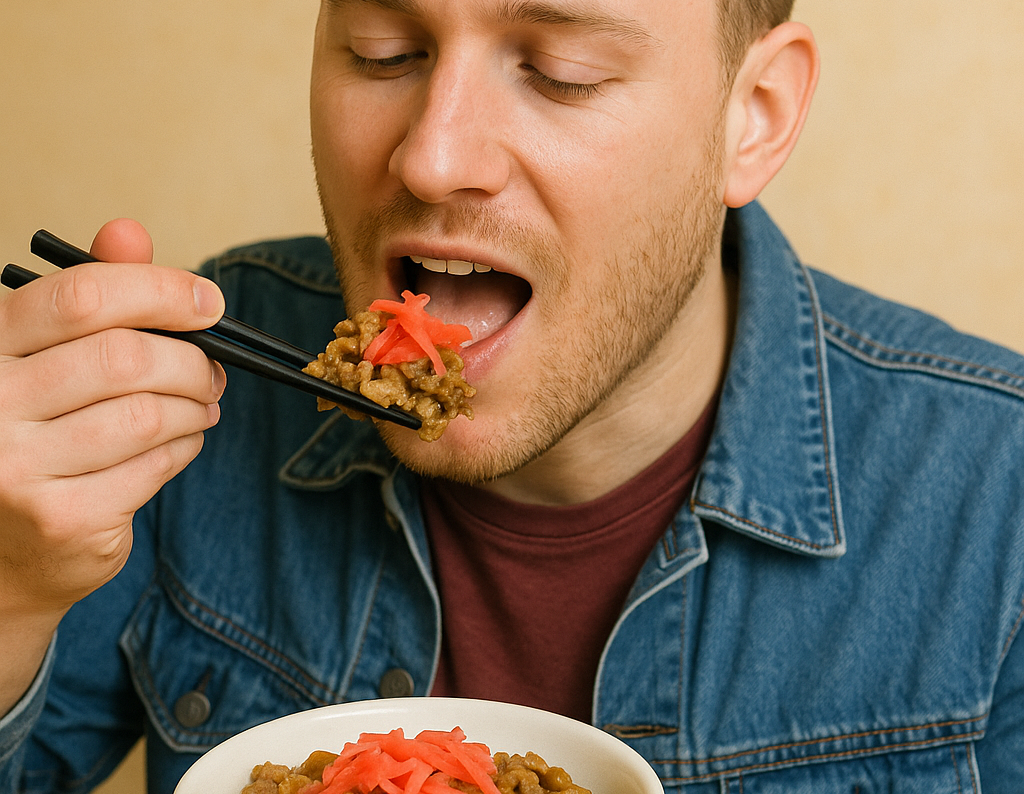
牛丼は、日本の“早い・安い・うまい”を体現するファストフードであり、ひとりでも気軽に立ち寄れるスタイルが特徴です。
Gyudon represents Japan’s “fast, cheap, and tasty” food culture, and is known for its casual, solo-friendly dining experience.
- fast:早い(速い)
- cheap:安い
- tasty:おいしい
- solo-friendly:一人でも入りやすい
- dining experience:食事体験
また、注文後すぐに出てくるスピード感や、トッピングで味を変えられる点も魅力です。
Its quick serving time and customizable toppings also add to its appeal.
- quick serving time:提供の早さ
- customizable toppings:選べるトッピング
「紅しょうが」や「七味」などの調味料は日本独特のもので、興味を持たれることもあります。
Seasonings like beni shoga (pickled ginger) and shichimi (seven-spice blend) are unique to Japan and often catch tourists’ attention.
- pickled ginger:紅しょうが
- seven-spice blend:七味唐辛子
【ピックアップ単語】
tasty
having a strong and pleasant taste when it is eaten
食べたときに強くて心地よい味がすること。
まとめ
今回は、牛丼屋店員の仕事内容や接客時に役立つ英語表現、日本の牛丼文化についてご紹介しました。
牛丼は、気軽さとスピード感、そして日本独特の味わいが魅力の料理であり、外国人観光客にも好まれています。
英語で牛丼文化やメニューを丁寧に説明できれば、お客様にとって特別な体験を提供できるでしょう。今回の内容を、英語での接客に活かしてみてください。
Kimini英会話では、飲食業や観光業で役立つ英語表現を基礎から学べる法人向けレッスンをご提供しています。牛丼屋での英語接客に挑戦したい方は、ぜひご活用ください。