
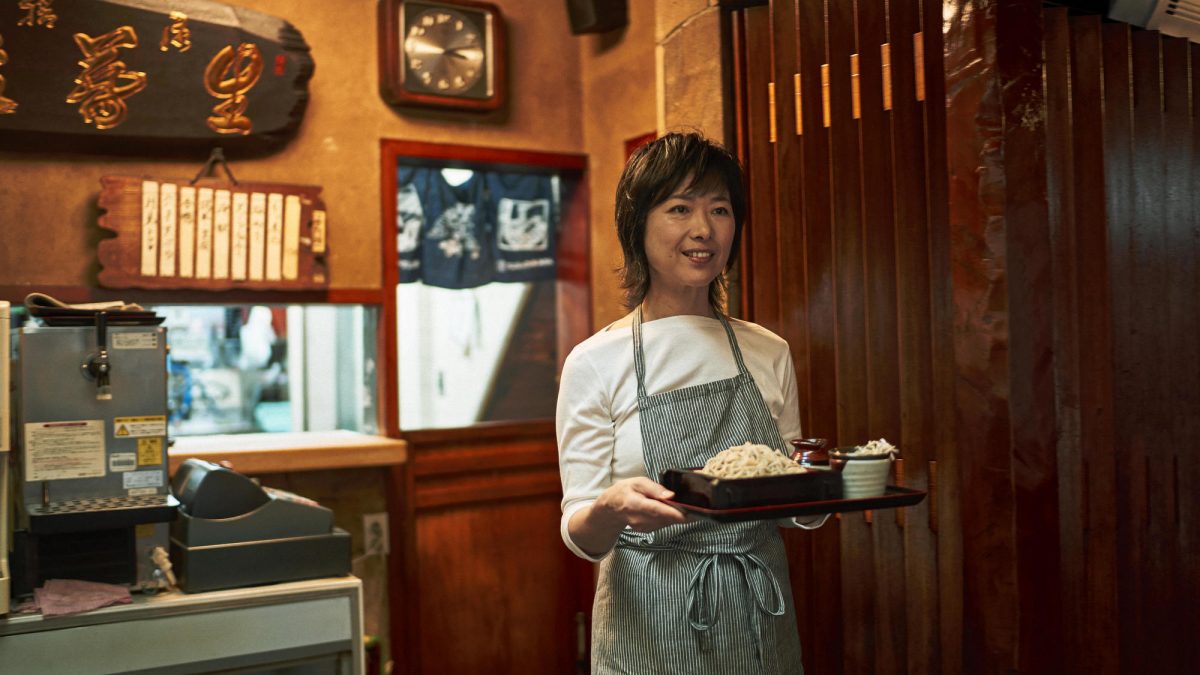
日本の伝統的な麺料理である「そば」は、香りや喉ごしの良さ、そして地域ごとのバリエーションの豊かさで、外国人観光客にも人気を集めています。
そんなそばを提供する「蕎麦屋(そばや)」では、食材や食べ方に関する質問が英語で寄せられることも少なくありません。
蕎麦屋で働く店員が、基本的な業務内容やそば文化を英語で説明できれば、お客様の理解と満足度は大きく高まります。
この記事では、蕎麦屋店員の仕事内容、接客スタイル、そば文化に関する知識を、英語例文とともにわかりやすくご紹介します。
訪日外国人との接客機会がある方、日本文化を英語で発信したい方は、ぜひ参考にしてください。
蕎麦(そば)とは?
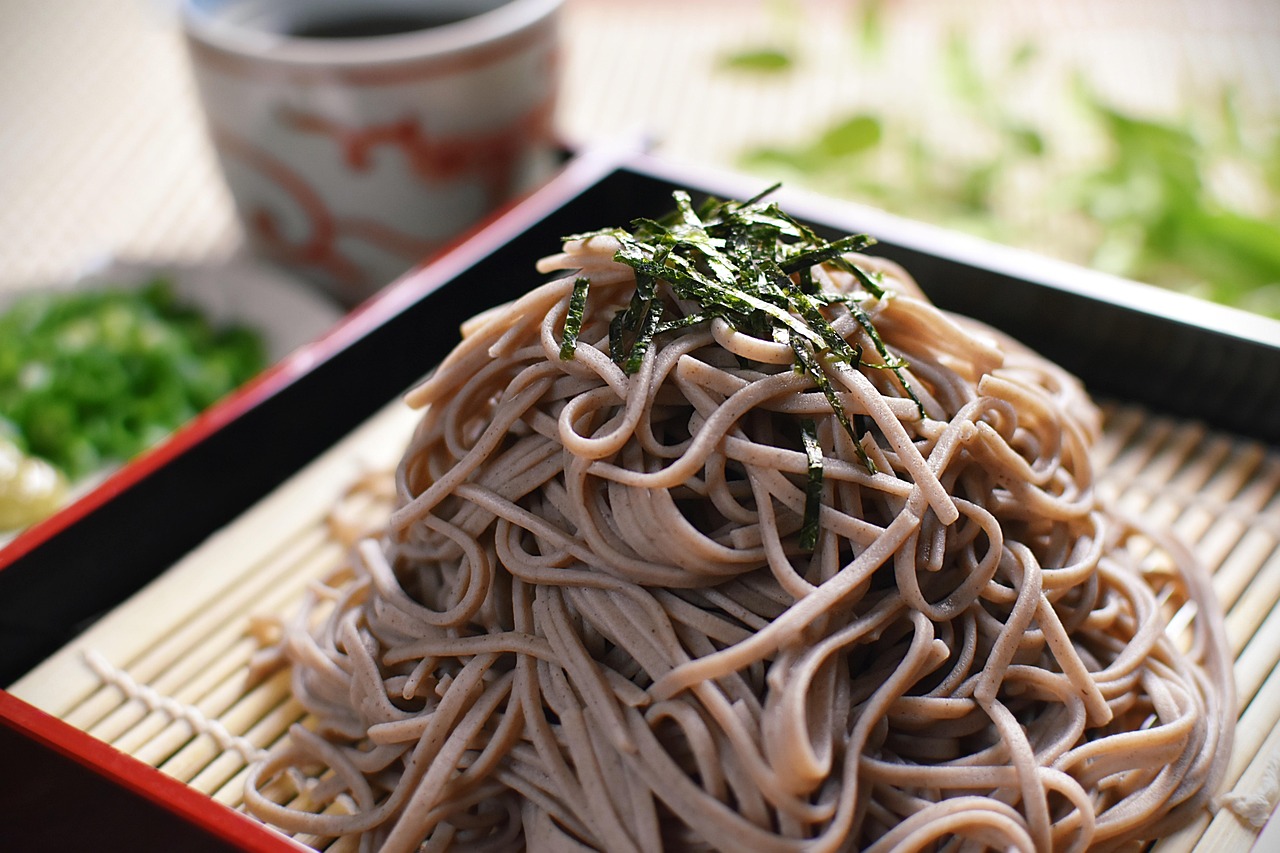
そばは、そば粉を主原料とした日本の伝統的な麺料理です。
Soba is a traditional Japanese noodle dish made mainly from buckwheat flour.
- soba:そば
- traditional Japanese noodle dish:日本の伝統的な麺料理
- buckwheat flour:そば粉
そばにはさまざまな食べ方があり、たとえば、温かいだしで食べる「かけそば」や、つけだれにつけて食べる「ざるそば」などがあります。
There are many ways to enjoy soba, such as hot soba in broth or cold soba with dipping sauce.
- hot soba:温かいそば(かけそば)
- cold soba:冷たいそば(ざるそば)
- broth:だし
- dipping sauce:つけだれ
【ピックアップ単語】
buckwheat
small dark seed that is grown as food for animals and for making flour
動物の飼料や小麦粉の原料として栽培される、小さくて黒い種子
蕎麦屋店員とは?
蕎麦屋店員は、料理の提供や注文受付だけでなく、日本の食文化を伝える接客の役割も担っています。
Soba restaurant staff not only serve food and take orders, but also help share Japanese food culture.
- restaurant staff:飲食店スタッフ
- take orders:注文を取る
- share food culture:食文化を伝える
特に外国人観光客に対しては、そばの食べ方や種類、アレルギーへの配慮など、わかりやすい説明が求められます。
They are expected to explain soba types, eating manners, and allergy concerns clearly to international guests.
- eating manners:食べ方のマナー
- allergy concerns:アレルギーに関する配慮
- international guests:外国人のお客様
【ピックアップ単語】
allergy
a medical condition that causes you to react badly or feel ill when you eat or touch a particular substance
特定の物質を食べたり触れたりすると、体に悪い反応が出る医療的な体質
蕎麦屋店員の主な業務内容
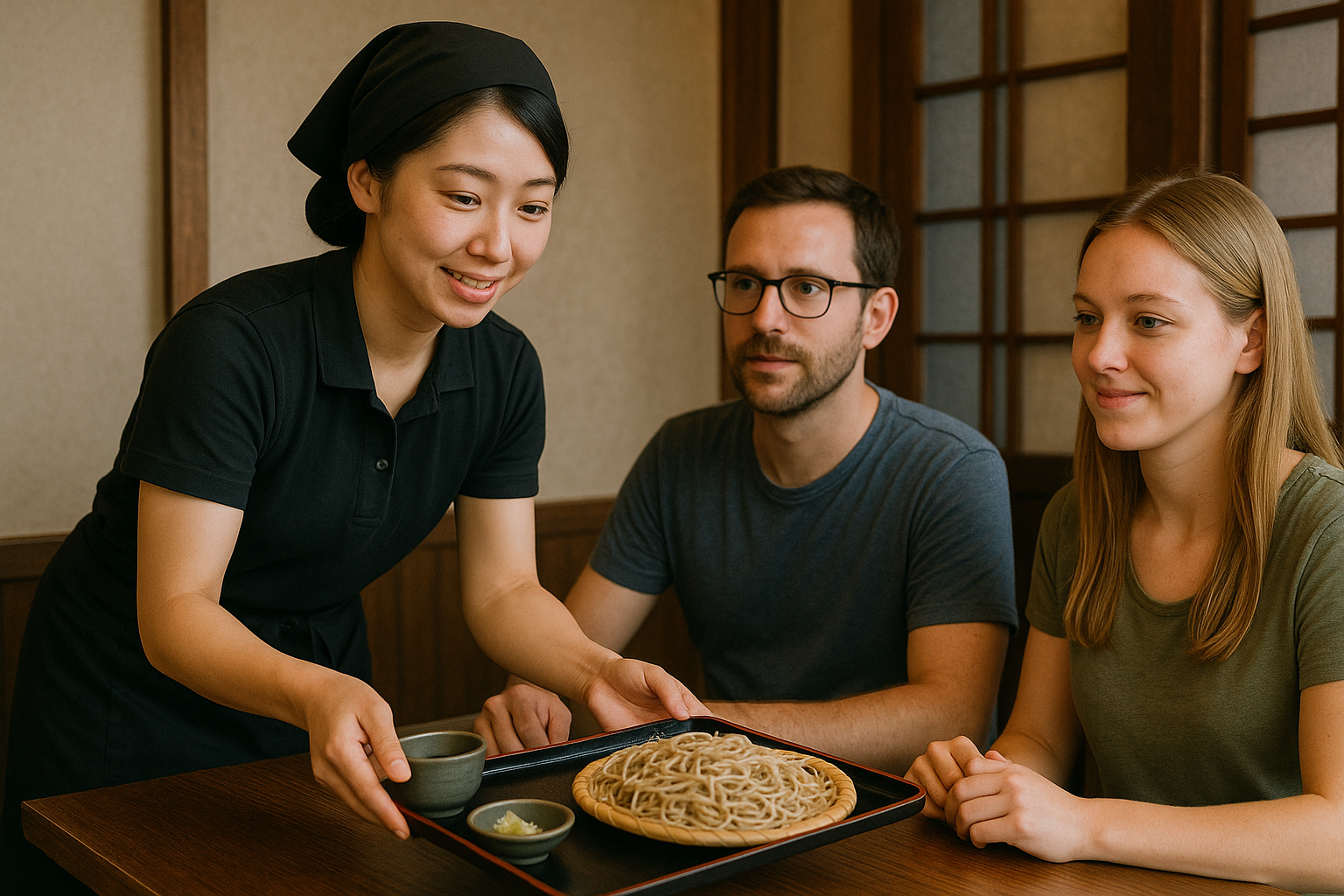
蕎麦屋店員の仕事には、料理の配膳、テーブルの片付け、簡単な調理補助など、さまざまな業務が含まれます。
Soba restaurant staff serve dishes, clear tables, and sometimes assist with food preparation.
- serve dishes:料理を配膳する
- clear tables:テーブルを片付ける
- food preparation:調理、食事の準備
また、つゆや薬味の使い方を聞かれることも多く、わかりやすい英語で説明できると役立ちます。
Customers often ask how to use the dipping sauce or condiments, so it’s helpful to explain in simple English.
- condiments:薬味(例:ネギ、わさび)
- how to use:~の使い方
- simple English:わかりやすい英語
【ピックアップ単語】
nutrients
a substance that is needed to keep a living thing alive and to help it to grow
生き物が生きるため、また成長するために必要な物質
外国人に伝えたい日本のそば文化
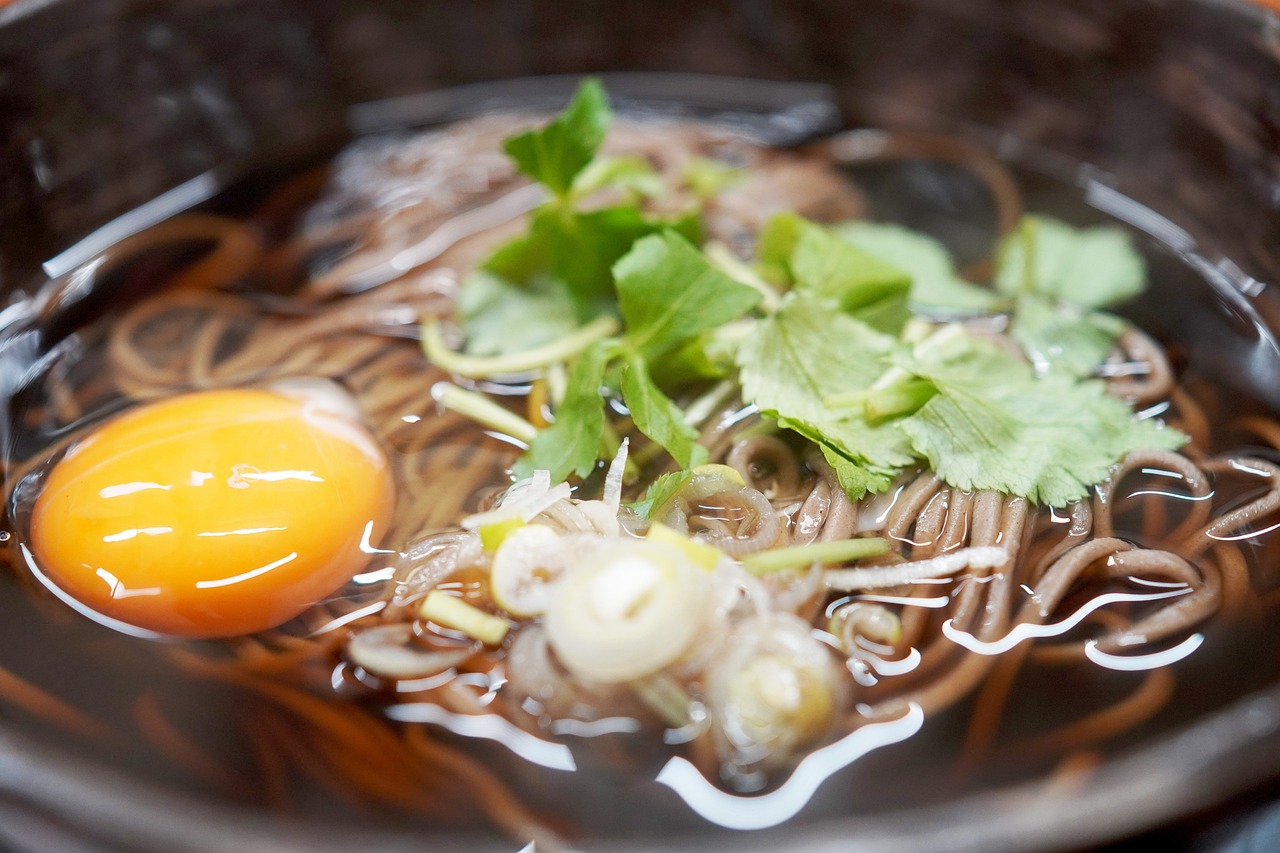
日本では、そばは日常食であると同時に、年越しそばなどの行事食としても親しまれています。
In Japan, soba is a common meal and also eaten on special occasions like New Year’s Eve.
- common meal:日常の食事
- special occasion:特別な行事
- New Year’s Eve:大晦日
また、地域ごとに味や食べ方に違いがあり、地元ならではのそばを楽しめるのも魅力です。
Each region has its own unique soba style, offering local flavors and traditions.
- unique style:独特なスタイル
- local flavors:地域の味わい
- traditions:伝統
こうした文化的背景を英語で伝えられると、お客様の理解もより深まります。
Explaining these cultural aspects in English helps deepen the guest’s understanding.
- cultural aspects:文化的側面
- deepen understanding:理解を深める
【ピックアップ単語】
meal
1 an occasion when people eat food, especially breakfast, lunch or dinner
食事をとるとき、特に朝食・昼食・夕食のこと
2 the food that is eaten at a meal
食事のときに食べる料理
3 grain that has been made into a powder, used as food for animals and for making flour
動物の餌や小麦粉の原料として使われる、粉状にされた穀物
まとめ
今回は、蕎麦屋店員の仕事内容や接客スタイル、そば文化の基本について、英語でどのように説明すればよいかを詳しくご紹介しました。
英語での簡単なやりとりを習得することで、外国人観光客に安心感を与え、日本文化への理解を深められます。
今回ご紹介したことを参考に、日々の業務に英語を少しずつ取り入れてみてください。
Kimini英会話では、飲食業や観光業で役立つ英語表現を学べる法人向けレッスンをご用意しています。蕎麦屋で英語の接客に自信をつけたい方は、ぜひ活用してみてください。