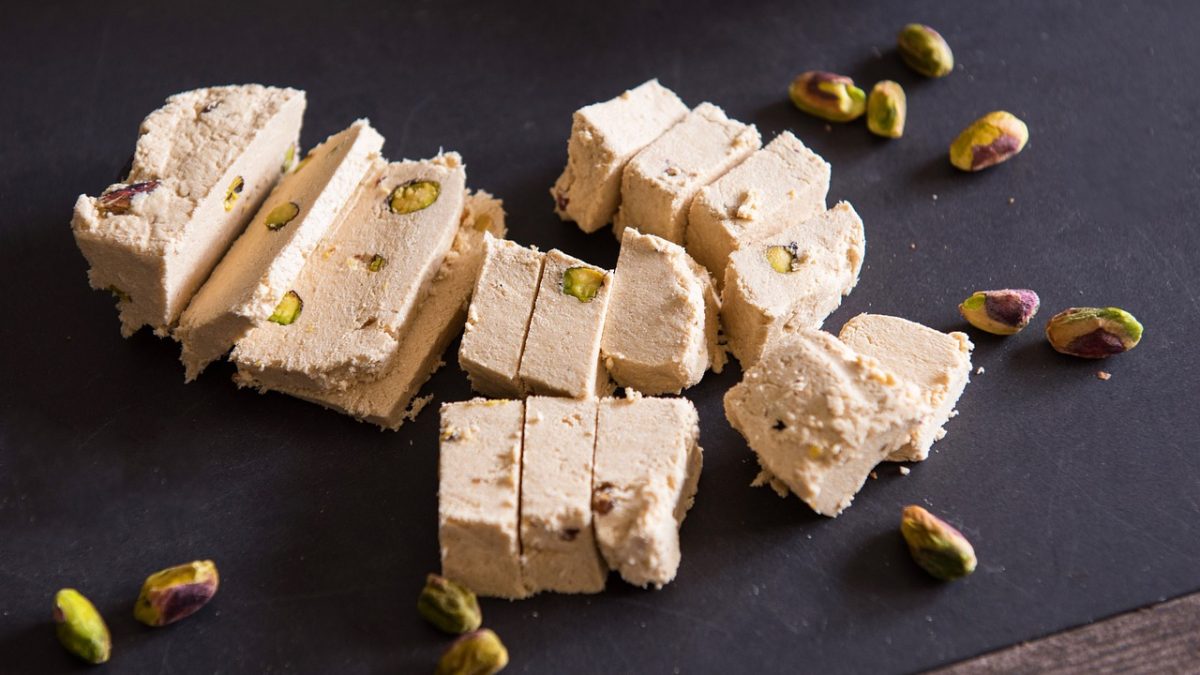
中東のお菓子ハルヴァについてご存知でしょうか。ハルヴァは中東が起源だと言われていますが、日本ではあまり馴染みがないお菓子ですね。
この記事では、中東のお菓子ハルヴァについて英語でも説明というテーマで、ハルヴァの特徴や起源に解説していきます。
ハルヴァとは?
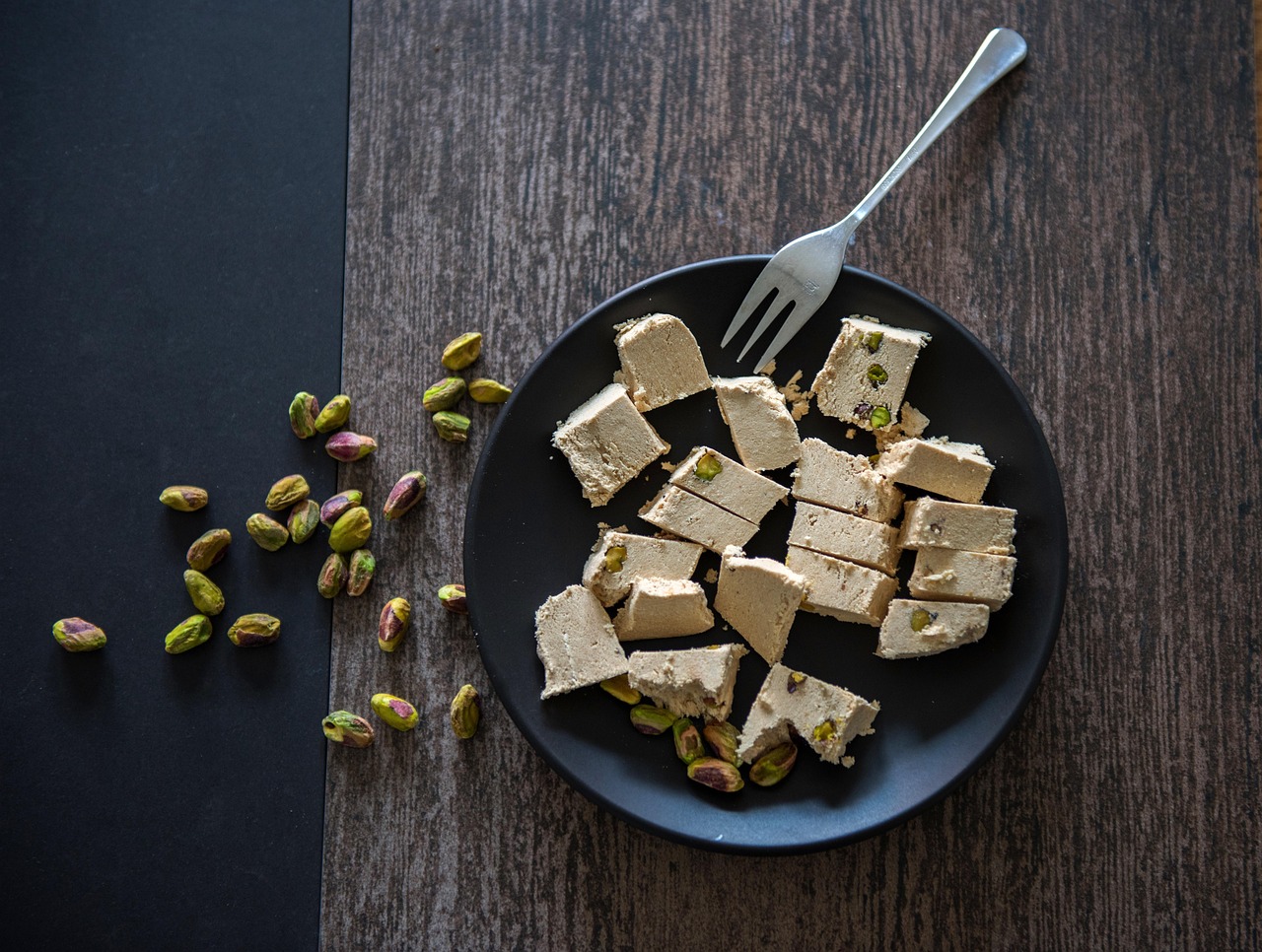
ハルヴァは中東を起源とするファッジに似たお菓子です。それは中東や北アフリカ、東ヨーロッパやバルカン半島、中央アジアや南アジアに広く広がっているお菓子の一種です。ハルヴァという名称は、様々なレシピ、一般的には、小麦粉、バター、液体油、サフラン、ローズウォーター、牛乳、ターメリックパウダーから作られる濃厚なペーストに使われています。
Halva is a fudge-like confectionary that originated in the Middle East. It is a type of confectionary that is widely spread throughout the Middle East and North Africa, Eastern Europe and the Balkans, Central Asia, and South Asia. The name “halva” is used for a broad variety of recipes, generally a thick paste made from flour, butter, liquid oil, saffron, rosewater, milk, turmeric powder, and sweetened with sugar.
ハルヴァはタヒニか小麦粉をベースにして、砂糖やバニラ、お好みのミックス物で甘みをつけることができます。タヒニは、すりつぶしたゴマと、時として塩から作られるペーストです。ナッツバターに似た食感で、ナッツのような、少し土っぽい風味があります。タヒニのおかげで、ハルヴァはファッジのやや甘さ控えめで、もう少し食感があるバージョンになっています。
Halva can be made from a tahini or flour base and is sweetened with sugar and vanilla, plus any desired mix-ins. Tahini is a paste made from ground sesame seeds, and occasionally salt. It has a texture similar to a nut butter with a nutty, slightly earthy flavor. Thanks to the tahini, halva is a slightly less-sweet version of fudge with a bit more texture.
ハルヴァの起源
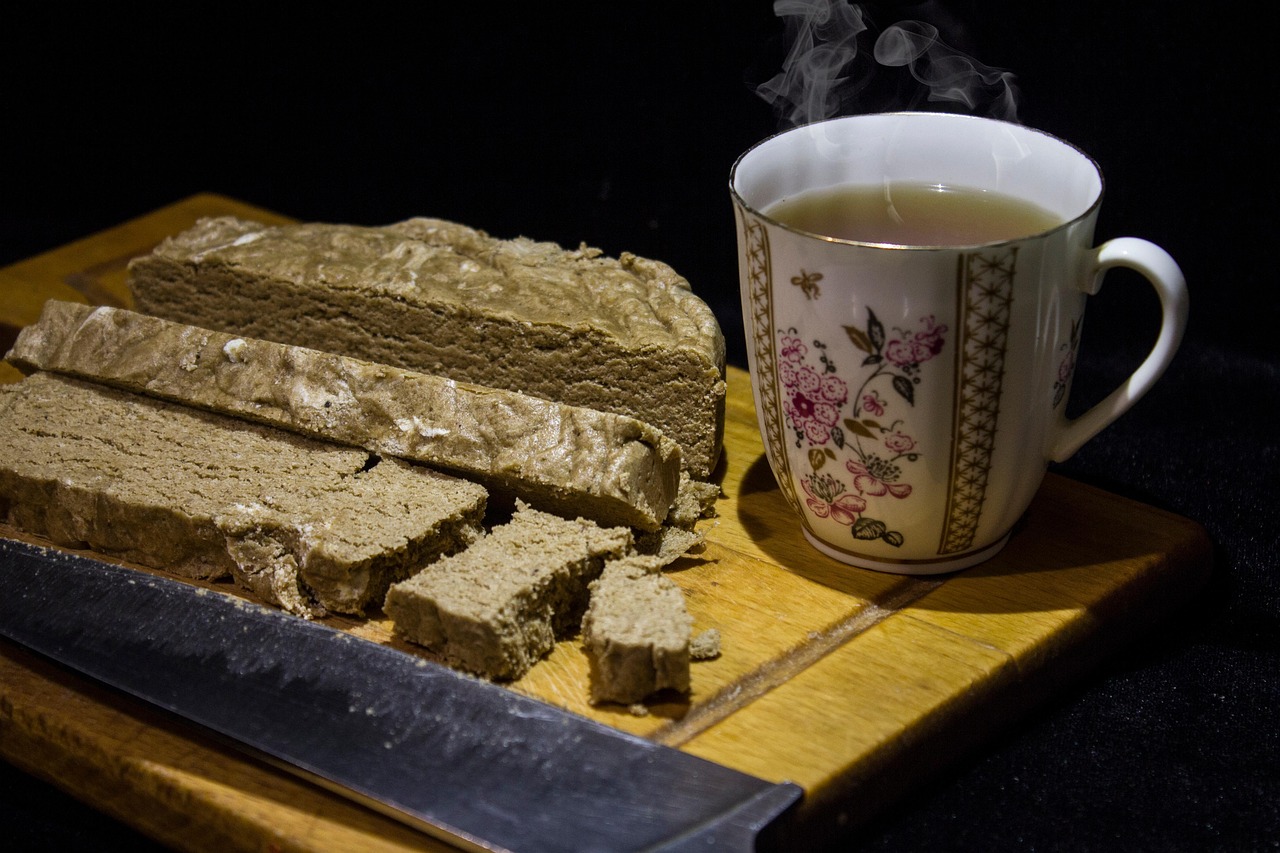
ハルヴァの起源は意見の相違があり、その起源は7世紀にアラビアで、デーツをつぶしたものとミルクを混ぜたものをハルヴァと呼ぶようになったという人もあれば、それはペルシャ(現在のイラン)で生まれたという人もいます。9世紀までには、ハルヴァという言葉は、現在おなじみの甘く煮たセモリナや小麦粉のペーストを含む、多くの種類のお菓子に適用されるようになりました。
The origin of halva is disputed: some say that it dates back to Arabia where a reference to halvah appeared in the 7th century, referring to a mixture of mashed dates with milk; others claim that it originated in Persia (modern day Iran). By the 9th century, the term halva was applied to numerous kinds of sweets, including the now-familiar sweetened cooked semolina or flour paste.
後者の説によれば、ハルヴァの起源は、642年ごろのオスマン帝国時代だと言われています。当時のオスマントルコ人だったアラブ人が、現在のイランにあたるペルシャ(現在のイラン)に上陸した時、ペルシャには小麦などの穀物ベースのお菓子が存在していました。そのお菓子にアラブ人が持ち込んだ砂糖、ハチミツ、デーツやりんごなどの材料が合わされ、甘いお菓子が作られました。そのお菓子は「高度で洗練されたお菓子」として扱われ、オスマントルコの領土全域に広がりました。これがハルヴァの原点だと言われています。
According to the latter theory, the halva originated in the Ottoman Empire around 642. When the Arabs, who were Ottoman Turks at the time, landed in Persia (present-day Iran), wheat and other grain-based sweets existed in Persia. The sweets were combined with sugar, honey, dates, apples, and other ingredients brought in by the Arabs to create a sweet confectionary. The confectionary was treated as a “highly sophisticated and refined confection” and spread throughout the Ottoman territory. This is said to be the origin of halva.
ハルヴァの最初のレシピは、13世紀のアラビア料理の本『Kitab al-Tabikh(料理の本)』と、13世紀のアル・アンダルス地方の匿名の料理本に記されました。ハルヴァはオスマン・トルコによってゴマをベースにしたものを含めて採用され、その帝国全体に広まった。
The first recipes of halva were documented in the 13th century Arabic cookbook, Kitab al-Tabikh(The Book of Dishes), as well as an anonymous cookbook from 13th-century Al-Andalus. Halva was adopted by the Ottoman Turks, including a sesame-based version, and spread throughout their empire.
ハルヴァのタイプ
ほとんどの種類のハルヴァは、砂糖や蜂蜜で甘く味付けされた比較的濃厚な菓子です。しかし、その食感はさまざまです。例えば、セモリナベースのハルヴァの食感は、非常にバターのような、しっとりとした塊のクスクスのようなものから、ゼラチンのような半透明のものまであり、ゴマベースのハルヴァはもっと乾燥していて砕けやすいです。
Most types of halva are relatively dense confections sweetened with sugar or honey. Their textures, however, vary. For example, semolina-based halva’s texture can be like a very buttery, moist clumpy couscous to something gelatinous and translucent, while sesame-based halva is drier and more crumbly.
セモリナ粉ベースのハルヴァは、 インドやパキスタンのもので、ゴマペーストベースのハルヴァは、中東やバルカン半島のものです。
While semolina flour-based halvah is from India and Pakistan, sesame paste-based halvah is from the Middle East and the Balkans.
まとめ
ハルヴァの特徴や起源などについて、英語でも解説しました。ハルヴァの特徴やタイプが分かったところで、ハルヴァを食べてみたいと思われた方もいたのではないでしょうか。
ハルヴァの起源については、諸説ありますが、オスマン帝国時代、現在のイランにあたるペルシャ(現在のイラン)で生まれたとする説が有力です。
クスクスのようなものから、ゼラチンのような半透明のもの、ゴマベースのものまで、ハルヴァには様々なタイプがあります。機会があれば、ハルヴァを食べてみたいですね。
そして、ハルヴァについて英語で説明する機会があれば、ぜひこの記事を参考にしていただければ幸いです。
【関連記事】